
Our Practitioners

Who You'll Be Seeing

Treatment at Praxis is delivered by fully qualified osteopathic manual practitioners, trained through the Canadian Academy of Osteopathy.
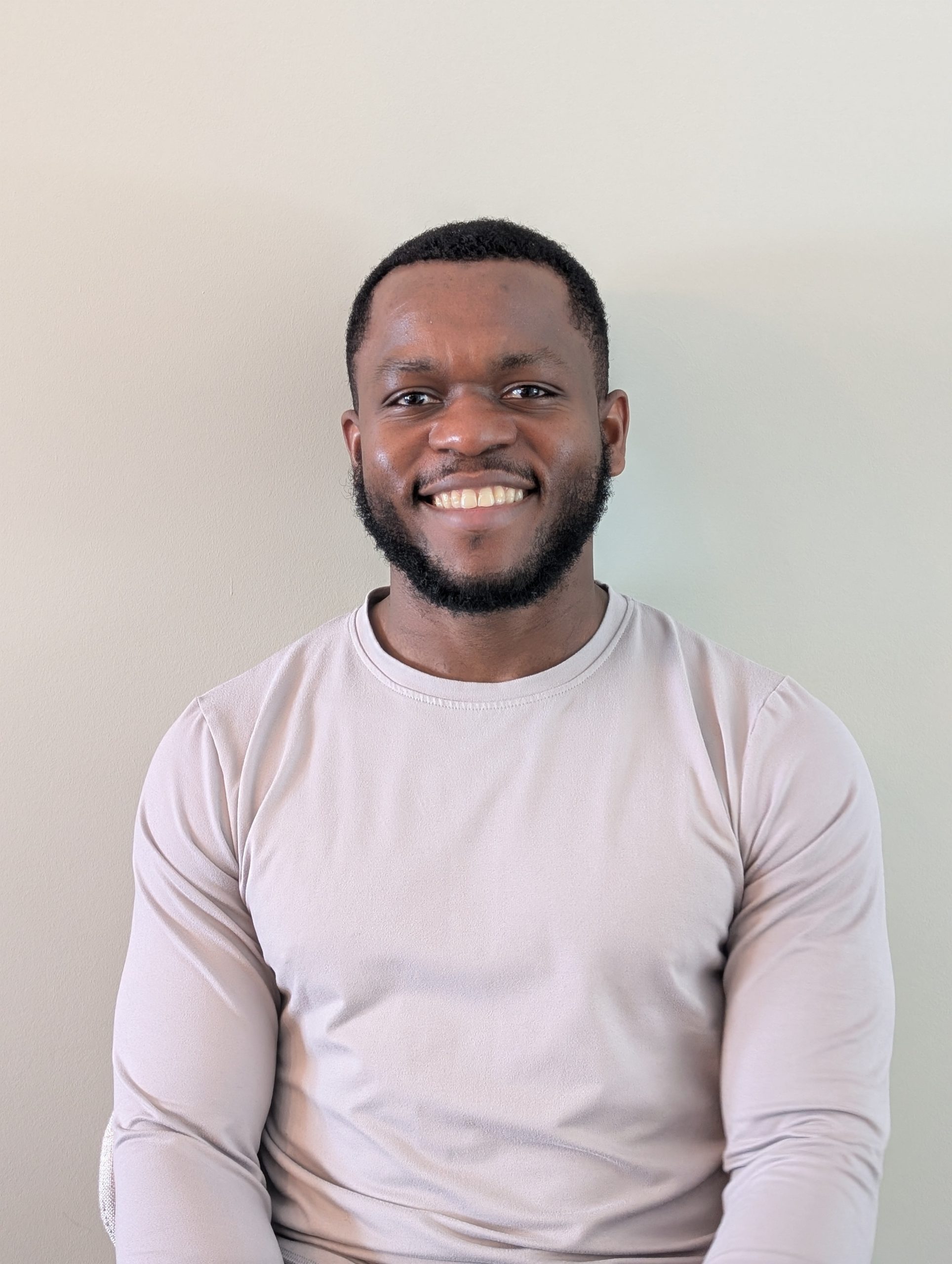
Eric Kamta, Osteopathic Manual Practitioner
CAO 4-Year Graduate CAO Calgary Instructor OSTCAN Member English · Français

Eric Kamta

Osteopathic Manual Practitioner

Eric graduated from the four-year program at the Canadian Academy of Osteopathy, widely recognized as the standard for osteopathic education in Canada, and now teaches at the CAO's Calgary campus alongside his clinical work. Teaching keeps the technique sharp; practising keeps the teaching honest.

His route into osteopathy was not direct. He played soccer through university in the United States while earning a degree in mathematics, then worked as an analyst before returning to study human kinetics. Time spent as a kinesiologist and later as a disability case manager shaped how he works now — methodically, and with a low tolerance for treating symptoms in isolation.

Background
B.Sc. Mathematics Earned while competing in soccer at university level in the United States. Worked as an analyst and in logistics.
M.Sc. Human Kinetics Graduate study in human movement, followed by practice as a kinesiologist and then a disability case manager.
Canadian Academy of Osteopathy The full four-year program — a minimum of 4,200 hours across anatomy, physiology, osteopathic theory, hands-on lab and clinical training.
Instructor & Clinician Teaches at the CAO Calgary campus while maintaining an active patient caseload at the Calgary clinic.
The Professional

What is an Osteopathic
Manual Practitioner?

An Osteopathic Manual Practitioner (OMP) is a healthcare provider skilled in assessing and treating the body using hands-on techniques. Treatment is entirely manual — no machines, no medication, no surgery.

Whole-Body Assessment

OMPs assess using palpation — listening to the body through gentle touch. They look at bones, muscles, joints, fascia, and circulation as an interconnected system, not in isolation.

Entirely Hands-On

Treatment uses light adjustments, soft tissue techniques, and gentle structural work. No machines, no ultrasound, no exercise prescription — just skilled, hands-on manual therapy.

Root Cause Focus

Rather than chasing symptoms, OMPs seek to uncover the mechanical cause of pain or dysfunction and restore balance — so the body can heal itself, as it is designed to do.

How Osteopathy Differs from Other Professions

vs. Massage Therapy

Massage therapy focuses on muscles and soft tissue for tension relief and relaxation. Osteopathy goes further — looking at why a muscle is under tension in the first place. The cause might be a rotated pelvis, restricted rib motion, or a postural imbalance elsewhere in the body.

vs. Physiotherapy

Physiotherapy commonly uses exercise prescription, machines, and modalities like ultrasound or electrical stimulation. Osteopathy uses none of these. OMPs assess and treat the body's mechanics entirely by hand, in the moment, addressing the cause rather than designing a recovery program.

vs. Chiropractic

Chiropractic care centres on spinal alignment and manipulation. Osteopathy takes a broader view — treating the whole body including joints, fascia, circulation, and organs. Where a chiropractor may focus on the spine, an osteopath considers how every part of the body relates to and affects every other part.

Good to Know

Common Questions

Have a question not answered here? Call or email us directly.

An Osteopathic Manual Practitioner (OMP) is a healthcare provider trained to assess and treat the body using entirely hands-on techniques. Treatment is drug-free, machine-free, and non-invasive. Practitioners use palpation, soft tissue techniques, light adjustments, and gentle structural work to identify the mechanical causes of pain or dysfunction and support the body's natural ability to heal itself.

Physiotherapy typically uses exercise programs, machines, and modalities like ultrasound or electrical stimulation. Chiropractic focuses primarily on spinal alignment. Osteopathy uses neither machines nor exercise prescription — it is entirely hands-on, and it takes a whole-body view, considering how bones, muscles, joints, fascia, and circulation all relate to one another. The goal is always to find and treat the root cause, not just the site of pain.

Your first session will begin with a thorough history — your practitioner will ask about your current concern, past injuries, lifestyle, and general health. They will then assess your posture, movement, and the mechanics of the affected area before beginning hands-on treatment. Most first appointments include both assessment and treatment in the same session. Wear comfortable clothing that allows easy access to the area being treated.

Osteopathic manual therapy is generally gentle and should not be painful. Some areas that are tender or restricted may be slightly uncomfortable during treatment, and it is normal to feel mild soreness in the treated area for a day or two afterward — similar to how muscles feel after a good stretch. Technique is adapted to each patient's comfort level at all times.

This depends entirely on your condition, how long you have had it, and how your body responds to treatment. Some patients notice significant improvement after one or two sessions; others with chronic or complex conditions may benefit from ongoing care. You will get an honest assessment of what to expect after your first appointment.

Yes — treatments are covered by most private health insurance plans in Alberta. Our practitioners are OSTCAN (Osteopathy Canada) members, which is recognized by most insurers. It is always worth checking your specific plan details with your provider before your first appointment. Osteopathy is not currently covered by Alberta Health Services (AHS) provincial coverage.

No referral is required to book an appointment. You can book directly through the booking button on any page. If your insurance plan requires a referral for reimbursement, check with your provider before your visit.

Osteopathy is suitable for people of all ages — from infants to seniors. Because treatment is entirely hands-on and adapted to each individual, it can be used safely across a wide range of conditions and life stages. Common reasons people seek osteopathic care include back, neck, and joint pain; headaches; sports injuries; pregnancy discomfort; and stress-related tension. If you are unsure whether osteopathy is right for you, get in touch and we will help you decide.

There are two locations in Alberta:

  • Calgary, AB — 10 Country Hills Landing NW #6, T3K 5P4.
  • Bonnyville, AB — inside Herb + Stone Wellness, 4816 50 Ave, T9N 2J3.

Get in touch at info@praxisosteo.com or 403-472-4651 and he will arrange your appointment at the most convenient location.